How to Style a Plant Shelf with Books, Ceramics and Trailing Plants
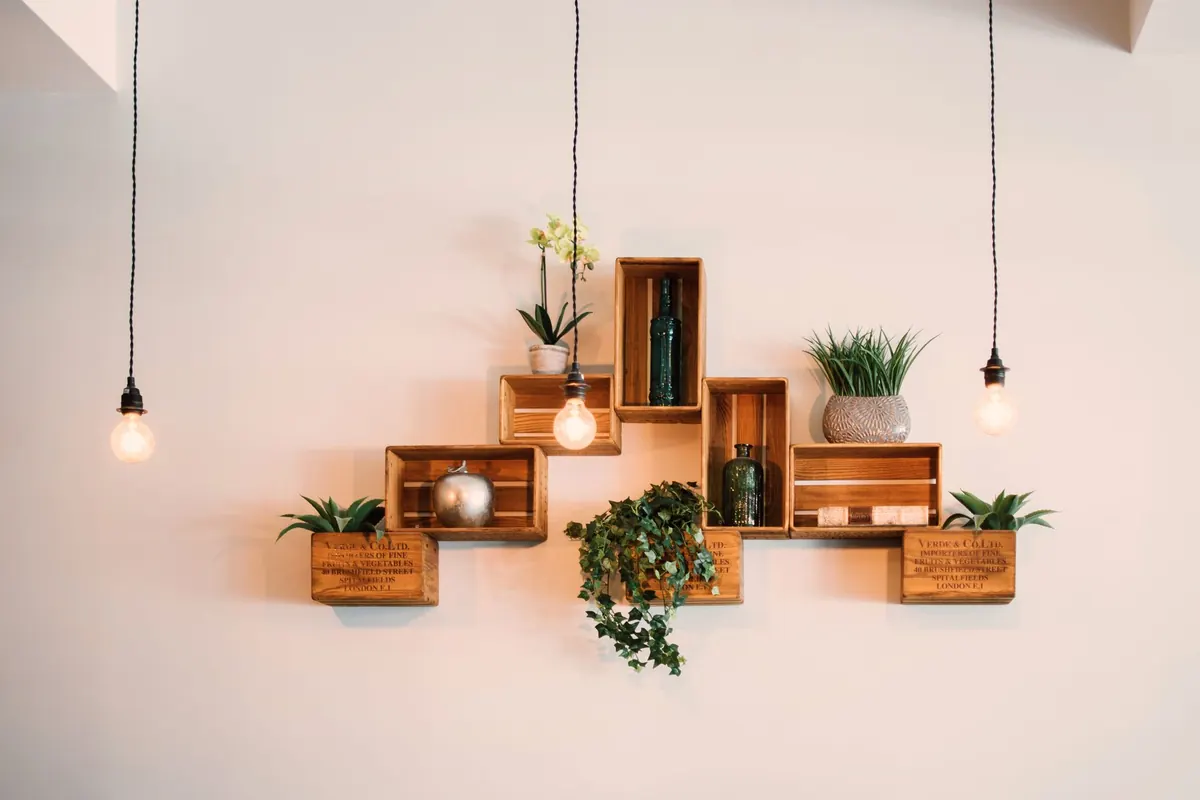
A shelf packed with plants can look like a garden centre trolley. The same shelf, arranged with a bit of thought, can carry the whole room. The difference is rarely how many things are on it — it is how they sit together. Books give structure, ceramics give weight, and trailing plants soften whatever they spill past. The method below works on a single floating plank above a desk or a full alcove of timber shelves.
Start with the shelf, not the objects
Before you move a single pot, look at the space you actually have. How long is the shelf, and how much clearance is there between it and the one above? A 90cm shelf with 35cm of headroom will take three loose clusters of things and a bit of breathing room. Any more than that and the eye stops reading it as a display and starts reading it as storage.
Note where the light falls. The end nearest the window is the brightest spot and belongs to the plants that need it; a shelf in a dim corner is a better home for ceramics and books, with one tough trailing plant to keep it alive. If you are styling a wooden shelf, plan for water. Saucers, cork mats or glazed cachepots that hold a nursery pot are all sensible insurance against a permanent ring mark.
Layer one: books as the backbone
Books do the quiet work here. They add horizontal lines, block colour and a bit of height at almost no cost, and they stop a plant shelf from looking like a nursery bench. Mix two arrangements rather than repeating one: a horizontal stack of three to five books, and a short row standing upright, either held by simple bookends or leaning at a slight angle.
On colour, you have two honest options. Keep the spines to a tight palette — creams, terracotta, deep green, a little black — or let them be mixed and rely on the plants to unify the shelf. If a mismatched row is bothering you, turn a few spines inward, or take off the dust jackets you dislike. Both take thirty seconds and change the whole feel.
Books are also excellent risers. Sit a small pot or a low bowl on top of a stack and you have added a level to the shelf without drilling anything. Even a 5cm lift gives the arrangement a step the eye can follow.
Layer two: ceramics for weight and contrast
Plants are soft and irregular. Ceramics are neither, which is why a shelf of only plants can feel fuzzy. Add a tall vase, a low shallow bowl and one small lidded pot, and the shelf suddenly has edges.
Mix finishes: a matte stoneware next to a glossy glaze next to something raw and unglazed. Odd numbers group more comfortably than even ones, and heights should step rather than match — a ceramic a few centimetres shorter or taller than the neighbouring book stack reads as considered, while identical heights read as a row of tins.
Give each piece a job. A vase holding dried stems, a bowl collecting keys, a pot with a candle in it. Objects that do something look intentional; objects that only sit there look like clutter waiting to be tidied away.
Layer three: trailing plants that earn their space
Trailing plants are the reason the shelf looks alive rather than styled. They also cause most of the mess, because a vine that has nowhere to go will wrap itself around a bookend or trail across the spines behind it.
Reliable choices for a shelf
- Golden pothos (devil's ivy) — forgiving in most light, quick to trail, easy to pinch back.
- Heartleaf philodendron — smaller leaves, a denser, tidier fall.
- Tradescantia — strong colour, fast growth, needs regular trimming.
- Rhipsalis — fine, architectural strands that suit a minimalist shelf.
- String of hearts — beautiful, but wants bright light and careful watering.
- Spider plant — good for a top shelf where its babies can hang freely.
Place a trailing plant at the end of a run of objects, or beside a book stack, so the vine hangs into empty air. Keep the lowest leaves at least 10cm clear of the shelf below, or the whole arrangement starts to look like it is sagging. One or two trailers per shelf is usually plenty; three turns a styled shelf into a hanging basket.
Water at the sink. Take the pot out of its cachepot, let it drain properly, and put it back dry. Rotate each plant a quarter turn every week or two so it grows evenly rather than stretching one way, and pinch out the longest straggly stems to keep the shape full.
Pull it together in six steps
- Clear the shelf completely and dust it. You cannot style around clutter you have stopped seeing.
- Place the largest items first: the biggest book stack, the largest ceramic, the fullest plant.
- Build outward from those anchors in loose clusters, leaving real gaps between them.
- Fill gaps with ceramics or books, not with more pots. Plants need room around them to look like plants.
- Add one trailing plant where its vine can fall freely, usually at an end or over a gap.
- Step back three metres and squint. If two objects compete, remove one. Repeat until it feels calm.
The clutter checklist
- Vines crossing in front of book spines. Move the pot forward or the books back.
- Everything at the same height. Add a stack or a riser to break the line.
- Too many small objects and nothing large. One big piece will calm ten small ones.
- More than roughly five plant pots on one shelf. Choose the best and rehome the rest.
- Plastic nursery pots and plant labels left on show. Both are quick wins.
Live with it for a week
Good shelf styling is not a one-off project. Leave the arrangement alone for a week and you will notice what actually works: which plant is stretching towards the window, which ceramic you keep moving out of the way, which stack of books nobody touches. Adjust one thing at a time rather than restyling from scratch.
Keep a basket nearby for the spares — the pots you rotate in, the extra candles, the book you are halfway through. Swapping two or three pieces every season keeps the shelf interesting without a full overhaul, and a shelf that changes gently always looks better than one frozen in place. Style it once, then let it grow.
Photo: 23555986 / Pixabay